


Independent kitchen buying guide
Are boiling water taps really worth it?
A detailed guide to safety, running costs, hard-water maintenance, installation and the leading UK brands—shaped by more than 20 years of designing kitchens and living with boiling water taps ourselves.
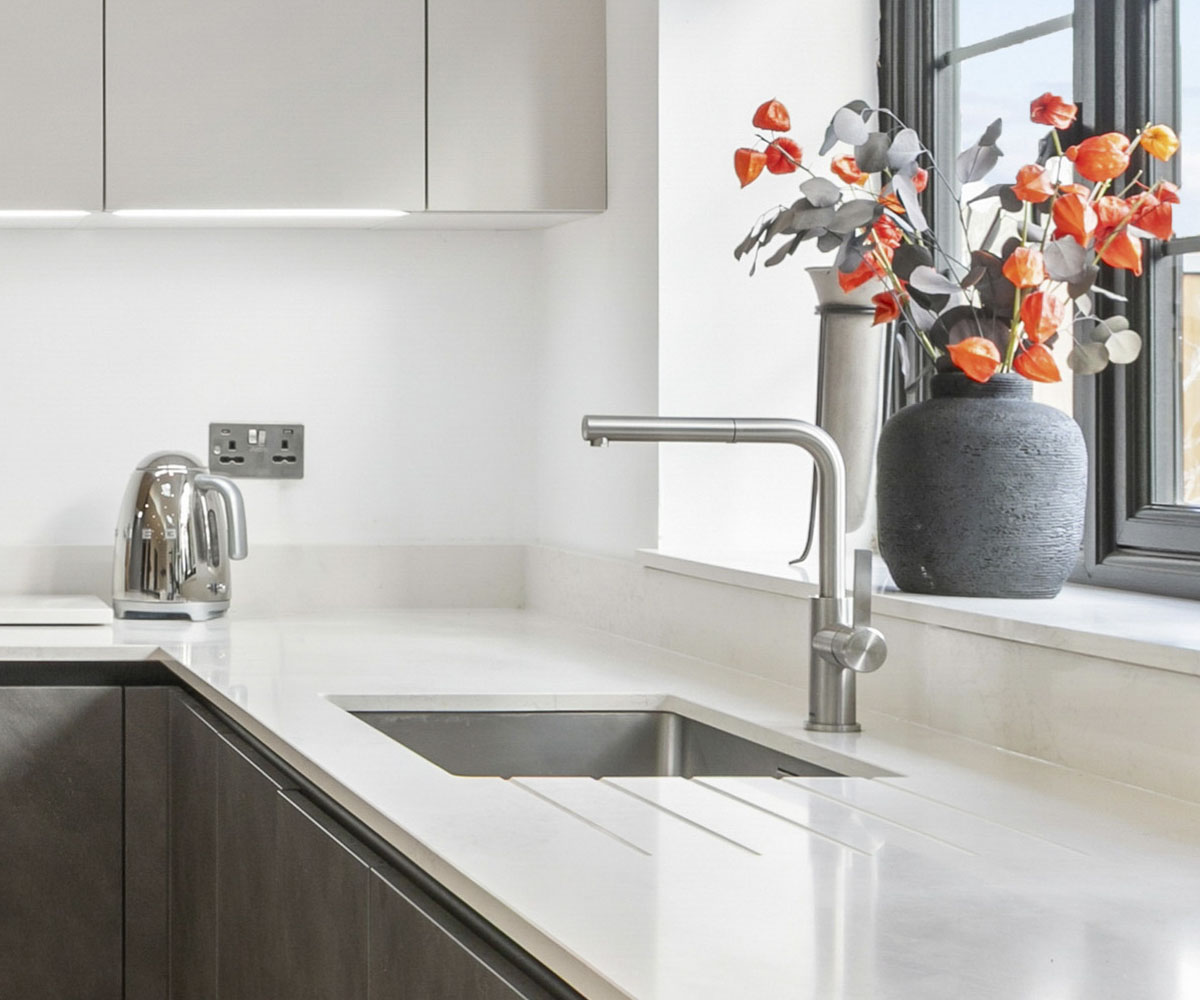
Real kitchen experience This guide combines independent research with the questions, concerns and buying decisions discussed with customers over more than two decades.
Watch our original guide
See boiling water taps explained on video
Our original boiling-water-tap video has become one of our most watched kitchen advice videos. It remains a useful visual introduction to how the systems work and why customers find them so convenient.
Since the video was filmed, the market has developed considerably. This written guide has therefore been fully updated with current information on safety, maintenance, running costs, chilled and sparkling water, installation and leading UK brands.
Contact C&C Kitchens today
100°C True boiling-water claim
98–99°C Near-boiling or steaming hot
Adjustable Variable-temperature systems
Benefit 01 They change the way you cook
Benefit 02 Small time savings accumulate
Benefit 03 The worktop feels less cluttered
Benefit 04 Owners often treat them as essential
Drawback 01 The purchase price
Drawback 02 Hard-water maintenance
Drawback 03 Loss of cupboard space
Drawback 04 Not every feature suits every household
01 The stream is aerated
02 The user remains engaged
03 The action is clearly different
Kettle behaviour Overfilling changes the comparison
System choice Extra functions use extra energy
Real value Time is the more important saving
Filters Replacement intervals differ
Servicing Not every system is maintained identically
Warranty Maintenance records can matter
Buying decision Manufacturer support matters
Understanding the basics
What is a boiling water tap and how does it work?
A boiling water tap stores heated water in an insulated tank beneath the worktop and delivers it through a dedicated safety control. Depending on the model, the same tap may also provide normal hot and cold water, filtered chilled water and sparkling water.
It does not replace normal hot and cold water
One of the most common misunderstandings we hear is that a boiling water tap replaces the ordinary hot-water function of the kitchen tap.
In most modern three-in-one and four-in-one systems, it does not. You still have conventional hot and cold water for washing, rinsing and everyday sink use. The boiling or near-boiling water travels through a separate controlled channel and requires a deliberate action to activate it.
Common misconception
A boiling water tap is not simply an ordinary mixer connected to extremely hot water. The high-temperature supply is controlled separately from the conventional hot and cold valves.
Earlier products often used a separate small tap purely for boiling water. The market then developed three-in-one systems combining normal hot, normal cold and boiling water in one tap.
Premium systems can now add chilled filtered still water and chilled sparkling water, potentially replacing the kettle, bottled water and a separate carbonation machine.
Used by manufacturers whose systems are designed and marketed to provide water at the recognised boiling point under stated conditions.
Common across many established systems. The slightly lower temperature may help manage steam, spluttering and delivery.
Some products allow the stored or dispensed temperature to be adjusted for different drinks and household preferences.
Next, we look at the advantages and disadvantages of everyday ownership.
Continue to benefits and drawbacksEveryday ownership
The real benefits and drawbacks
Boiling water taps are excellent products, but they are not an automatic recommendation for every household. The strongest reason to buy one is the improvement to everyday kitchen use. The main reasons to hesitate are purchase price, maintenance and the space required beneath the sink.
Main advantages
- Boiling or near-boiling water is immediately available.
- Cooking tasks begin more quickly.
- The kettle can be removed from the worktop.
- You dispense only the amount required.
- Premium systems can add chilled and sparkling water.
Main disadvantages
- Quality systems involve a significant initial cost.
- Filters and scale protection add ongoing expense.
- Equipment occupies cupboard space beneath the sink.
- Chilled and sparkling modules increase the price.
- Budget systems may have weaker long-term support.
Filling saucepans for vegetables, pasta, rice, stock or gravy is immediate, rather than beginning with a wait for the kettle.
The individual saving may be short, but it is repeated several times each day throughout the life of the kitchen.
Removing the kettle creates a cleaner appearance, especially in contemporary kitchens built around clear surfaces and simple lines.
Customers who questioned the cost the first time commonly ask which model to choose when replacing their kitchen years later.
Premium systems are expensive, particularly when chilled or sparkling-water functions and specialist finishes are added.
Filters and scale-control systems require maintenance, especially in hard-water areas such as Hertfordshire.
A standard tank occupies part of the sink cabinet. Chilled and sparkling systems require additional equipment and planning.
Sparkling water is valuable to regular users, but difficult to justify where it would rarely be used.
Next, we look at safety, children and the controlled delivery of boiling water.
Continue to safetySafety and family use
Are boiling water taps safe?
Safety is usually the first concern raised by families. Modern premium systems use deliberate activation controls, separate water channels and carefully managed delivery to reduce the likelihood of accidental use.
Safety was one of our concerns too
When we first began selling boiling water taps, safety was the greatest concern—particularly around children.
Installing a working display in our showroom allowed us to use the product ourselves and understand how different it was from pouring boiling water from a kettle.
Showroom experience
Once customers see the safety control and aerated flow demonstrated, their concern normally reduces very quickly.
Depending on the manufacturer, activation may require a push-and-turn movement, sustained pressure, a safety collar or a double-tap sequence.
This makes accidental operation far less likely than lifting a standard mixer lever.
Air bubbles alter the character of the flow, so it behaves differently from a solid quantity poured from a kettle.
Many systems require continued pressure or movement for the boiling-water function to remain active.
The boiling function is normally distinct from the conventional hot and cold controls.
Next, we examine electricity use and realistic running costs.
Continue to running costsElectricity and everyday use
Do boiling water taps cost more to run than a kettle?
There is no universal answer. The comparison depends on the insulation and capacity of the system, household usage, electricity prices and how often a kettle would otherwise be overfilled. We would not recommend a boiling water tap primarily as a way of saving money.
A kettle repeatedly heats water from cold
Kettles use a relatively powerful element for a short period. Their efficiency depends heavily on boiling only the quantity actually required.
In practice, many people overfill the kettle. The unused hot water cools and may be reheated later, so energy is spent heating water that is not immediately used.
A boiling water tap dispenses the quantity required at that moment, which reduces this particular form of waste.
A hot-water tank maintains temperature
A boiling-water system stores a limited quantity of water in a heavily insulated tank and uses energy to maintain the selected temperature.
The system therefore has a standby cost even when no water is being dispensed. Chilled and sparkling modules use additional equipment and should not be included in a simple kettle comparison.
Actual consumption varies between products, tank capacities and households.
A carefully filled kettle is more efficient than one routinely filled with twice the water required.
Refrigeration, filtration and carbonation make a full drinking system different from a boiling-only tap.
The compelling benefit is immediate access to hot water throughout the day rather than a guaranteed reduction in utility bills.
Next, we explain filters, limescale and ownership in a hard-water area.
Continue to maintenanceLong-term ownership
Hard water, filters and maintenance
C & C Kitchens operates in a hard-water area, so scale protection is an important part of our advice. A premium boiling water tap is generally reliable, but filters and scale-control components must be maintained according to the manufacturer’s instructions.
Why hard water matters
Limescale forms when naturally occurring minerals in hard water are heated. This affects kettles, boilers and other water-heating equipment, including boiling-water taps.
Scale can reduce water flow, affect heating performance and place additional strain on internal components.
The correct filter or scale-control system helps protect the equipment, but it creates an ongoing maintenance responsibility.
What maintenance may involve
- Replacing water filters at the specified interval.
- Using the correct cartridge for local water hardness.
- Checking for reduced flow or signs of scale.
- Descaling or servicing the tank where required.
- Replacing carbon-dioxide cylinders on sparkling systems.
- Keeping proof of maintenance for warranty purposes.
Some manufacturers recommend time-based replacement, while others use water volume, hardness or an electronic reminder.
Some products are designed for owner maintenance; others have manufacturer service plans or specialist engineers.
Failure to use the specified filter or follow servicing guidance may affect warranty protection on some products.
Long-term parts availability and technical backup are major reasons not to choose purely on the lowest initial price.
The guide continues with installation, chilled and sparkling water, brand comparisons and our final buying recommendations.
Continue to installationPlanning your kitchen
Installation, space and planning
It is better to decide that you want a boiling water tap near the beginning of the kitchen project. The tap itself may look simple, but the system requires space beneath the sink for its tank, filters and any additional chilled or sparkling-water equipment.
Why the decision should be made early
Planning the system before the kitchen is ordered gives the designer time to accommodate the equipment properly rather than trying to squeeze it into the remaining cupboard space.
This is particularly important where the sink cabinet must also contain waste pipes, cleaning products, waste bins or a waste disposal unit.
Practical design advice
A boiling-only system requires less space than a complete chilled-and-sparkling installation. Ask to see the actual under-sink components before approving the cabinet layout.
Many systems can be fitted retrospectively, but the result is usually neater and less disruptive when the installation is part of the original design.
Premium drinking-water systems
Are chilled and sparkling-water systems worth the extra cost?
The answer depends far more on your household than on the technology. Before paying for the additional equipment, consider whether you regularly drink bottled sparkling water or prefer cold filtered water to normal mains water.
Chilled filtered water can taste noticeably more pleasant than ordinary tap water, particularly in hard-water areas.
The added cost is easier to justify where the household already buys bottled sparkling water and will use the function frequently.
Refrigeration, filtration and carbonation add equipment, consumables and ongoing maintenance to the system.
UK market overview
Which boiling water tap should you buy?
There is no single best system for every household. Compare the functions, cupboard-space requirements, filtration, warranty and long-term support—not only the tap’s appearance or introductory price.
Quooker
A leading premium system offering genuine 100°C boiling water and, with CUBE, chilled filtered still and sparkling water. Strong recognition, broad finish options and an established support network.
BLANCO
Advanced multifunction systems with boiling, chilled and sparkling options. Particularly attractive where streamlined installation, measured dispensing and connected controls are priorities.
Franke
A broad range extending from three-in-one taps to premium Water Hub systems. Compare individual models carefully because specifications and warranties vary across the range.
QETTLE
British-designed systems offering genuine boiling water at a more accessible price than some premium competitors, with several tank capacities and straightforward maintenance.
GROHE Red
A strong international tap manufacturer offering approximately 99°C water, different boiler capacities and an established installation and service network.
InSinkErator
Offers steaming-hot, three-in-one and four-in-one products. A familiar manufacturer with strong kitchen-sector recognition and meaningful component warranties.
Zip HydroTap
Sophisticated boiling, chilled and sparkling-water systems with strong filtration and servicing support. Often ideal for premium homes or heavier usage.
Perrin & Rowe
Particularly suitable where tap design, special finishes and compatibility with a traditional painted kitchen are central to the specification.
Abode Pronteau
A credible mid-to-premium alternative with varied styles, compact boiler options and established kitchen-showroom presence.
| Brand | Hot-water type | Chilled | Sparkling | Best suited to |
|---|---|---|---|---|
| Quooker | 100°C boiling | Yes, with CUBE | Yes, with CUBE | Premium all-round system and strong support |
| BLANCO | Up to 100°C on selected systems | Yes | Yes | Advanced multifunction water systems |
| Franke | Varies by model | Selected systems | Selected systems | Customers coordinating sinks, taps and appliances |
| QETTLE | 100°C boiling | No on core boiling range | No on core boiling range | Good-value genuine boiling-water systems |
| GROHE Red | Approximately 99°C | No | No | Established engineering brand and simple hot-water use |
| InSinkErator | Steaming hot | Selected systems | No | Recognised kitchen-sector manufacturer |
| Zip HydroTap | Usually approximately 98°C | Yes | Yes | Premium complete drinking-water installations |
Making the final choice
Our three rules for choosing the right system
Specifications matter, but they should be considered alongside how the household actually uses its kitchen and the quality of support available throughout ownership.
Do not pay for sparkling water simply because it is available. Choose it where the household regularly drinks sparkling water or wants to reduce bottled-water purchases.
Ask to see the tank, filters, chilling unit and carbon-dioxide cylinder rather than considering only the visible tap.
Check the warranty, servicing arrangements, consumable costs and availability of replacement parts before comparing headline prices.
Myths and misunderstandings
What people often get wrong about boiling water taps
Premium systems normally require a deliberate action that is clearly different from operating a conventional mixer lever.
The benefit is immediate access to hot water throughout the day for cooking, drinks and preparation—not simply replacing one appliance.
Most current three-in-one and four-in-one systems retain ordinary domestic hot and cold water as separate functions.
Running-cost comparisons depend on household usage, tank performance and kettle-filling habits. Convenience is the more dependable benefit.
Frequently asked questions
Questions we hear from customers
These are some of the practical questions raised when customers are deciding whether a boiling water tap belongs in their new kitchen.
Can a boiling water tap completely replace a kettle?
For most households, yes. It can supply immediate water for drinks, saucepans, stock and other everyday tasks.
Can one be added to an existing kitchen?
Often, yes, provided there is sufficient cupboard space, suitable plumbing, electrical provision and access for installation.
Can I still have a normal hot and cold mixer?
Most modern multifunction taps combine normal domestic hot and cold water with a separately controlled boiling-water function.
Are boiling water taps suitable in hard-water areas?
Yes, but the correct scale-control system must be selected and maintained. Filter replacement should be included in the ownership budget.
How often do filters need replacing?
It varies by manufacturer, water hardness and usage. Follow the specific product guidance rather than applying one interval to all brands.
Do they require servicing?
Some need only routine filter or scale-control maintenance, while others offer or recommend periodic professional servicing.
Do they add value to a property?
They are unlikely to add a measurable amount to the sale price, but they are increasingly regarded as an expected feature in premium kitchens.
Would we buy one again?
Yes. After living with one, it is difficult to return to waiting for a kettle several times each day.
See boiling water taps working in our showroom
Visit C & C Kitchens in Cheshunt to discuss the right system, finish and under-sink arrangement for your kitchen with an experienced designer.